Common Signs Your Roof May Need Repair
 Loft roof expert
A roof does not always need to fail completely before it starts causing problems. In many cases, the first warning signs are relatively small: a damp patch, a slipped tile, damaged flashing or an unusual mark in the loft.
Spotting these issues early can make a significant difference. Minor repairs are often easier and less expensive to deal with than damage that has been left for months or years.
Homeowners do not need to climb onto the roof to carry out basic checks. Many potential problems can be identified safely from ground level or from inside the loft.
Here are some of the most common signs that a roof may need attention.
Missing or Slipped Roof Tiles
Missing, cracked or displaced tiles are among the easiest roofing problems to notice.
Tiles can move because of strong winds, ageing fixings, impact damage or general deterioration. Even a small exposed area can allow rainwater to reach parts of the roof that are normally protected.
From ground level, look for:
- gaps in the roof covering
- tiles sitting at unusual angles
- cracked or broken tiles
- sections that appear uneven
- pieces of tile around the property after bad weather
A single damaged tile does not necessarily mean that a roof requires major work, but it should usually be repaired before water has an opportunity to penetrate further.
Damp Patches on Ceilings
Water marks on ceilings are one of the clearest signs that moisture may be entering the property.
These marks can appear as yellow, brown or darker patches and may become more noticeable after heavy rain.
The source is not always directly above the visible stain. Water can travel along roof timbers, pipes or other surfaces before appearing inside a room.
For this reason, simply painting over the affected area is unlikely to solve the underlying problem.
If a damp patch appears after rainfall, the roof, flashing and nearby drainage should be investigated.
Signs of Water Inside the Loft
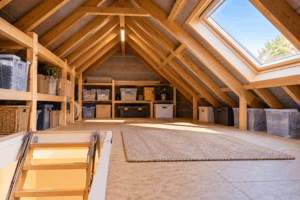
The loft is often the best place to identify a roofing problem before it becomes visible elsewhere in the home.
During daylight, inspect the underside of the roof for signs such as:
- damp timber
- staining
- water droplets
- wet insulation
- mould
- damaged roofing membrane
- daylight appearing through unexpected gaps
After periods of heavy rain, it may also be possible to identify fresh moisture around rafters or other roof components.
Not every small amount of moisture indicates a roof leak. Condensation can also develop inside poorly ventilated roof spaces, so the cause needs to be identified correctly.
Damaged Flashing
Flashing is used around areas where the roof meets another surface or structure.
Common locations include:
- chimneys
- roof valleys
- dormer windows
- rooflights
- walls adjoining pitched roofs
Traditionally, lead has been widely used for flashing, although alternative materials are also available.
If flashing becomes loose, cracked or separated from the surrounding surface, water can enter through the joint.
Because these areas experience considerable exposure to rain, even relatively small defects can eventually result in internal damp.
Problems Around Chimneys
Chimneys create several potential points of water entry.
Apart from damaged flashing, problems can include cracked mortar, damaged chimney pots, deteriorating brickwork and failing chimney caps.
From the ground, look for visibly loose brickwork, damaged pointing or sections that appear to be leaning.
Older chimneys that are no longer used still need to remain weatherproof.
If water is appearing near a chimney breast inside the property, the chimney and its connection to the roof are both worth checking.
Sagging Areas of the Roof
A roof should generally have a consistent shape.
If part of the roof appears to sag or dip noticeably, this may indicate a structural problem rather than a simple surface repair.
Possible causes can include:
- damaged roof timbers
- long-term water penetration
- excessive loads
- deterioration of structural components
- previous alterations to the roof
A visibly sagging roof should be assessed professionally, particularly if the change appears to be getting worse.
Blocked or Damaged Gutters
Gutters are technically separate from the main roof covering, but they play an important role in protecting the building.
Their purpose is to carry rainwater safely away from the roof and walls.
Leaves, moss and other debris can block gutters, causing water to overflow. Damaged joints or poorly aligned sections can create similar problems.
Signs of drainage issues include:
- water running down external walls
- overflowing gutters during rainfall
- staining beneath gutter joints
- plants growing from gutters
- persistent damp around the top of external walls
Regular gutter cleaning can help prevent water from collecting where it should not.
Moss Growth
A small amount of moss is common on older roofs and does not automatically mean that the roof is damaged.
However, heavy moss growth can hold moisture and may make it more difficult to see the condition of the roof covering.
Moss can also become dislodged and collect in gutters and downpipes.
Aggressive cleaning methods should be avoided, particularly on older tiles. High-pressure washing can sometimes damage roof coverings or remove protective surface finishes.
If moss removal is required, the method should be appropriate for the type and condition of the roof.
Increasing Problems After Storms
Strong winds and prolonged periods of heavy rain can expose weaknesses that were previously difficult to notice.
After severe weather, it can be useful to visually inspect the roof from ground level.
Look for new gaps, loose ridge tiles, damaged guttering or debris around the property.
The loft can also be checked for signs of fresh water ingress.
Problems found immediately after a storm are often easier to trace because the damage is recent.
Excessive Condensation in the Loft
Not every roofing problem involves rainwater entering from outside.
Condensation can occur when warm, moist air from the living space reaches colder surfaces in the loft.
Common signs include droplets on roofing membranes, damp timbers or mould developing in the roof space.
Possible contributing factors include inadequate ventilation, blocked ventilation paths or moisture entering the loft from bathrooms and other areas of the home.
Improving insulation without considering ventilation can sometimes make condensation problems worse, so both need to be considered together.
Rising Heating Costs
Unexpected increases in heating costs can sometimes point towards problems with roof or loft insulation.
Heat naturally rises, and poorly insulated roof spaces can allow a significant amount of warmth to escape.
Damaged insulation, gaps or areas compressed by storage can reduce its effectiveness.
This is not necessarily a roofing repair issue, but checking the loft can help reveal whether insulation needs to be improved or repositioned.
How Often Should You Check Your Roof?
A detailed roof inspection does not need to be carried out every few weeks.
For most homeowners, occasional visual checks are enough to identify obvious changes.
It can be sensible to inspect the roof:
- after severe storms
- when cleaning gutters
- before major loft work
- after noticing internal damp
- when buying an older property
- if the roof has not been checked for several years
Checks should normally be carried out from a safe position rather than by climbing onto the roof.
Repair or Replace?
Finding a problem does not automatically mean that the entire roof needs replacing.
Many roofing issues are localised and can be dealt with through targeted repairs.
The decision depends on factors such as the age of the roof, the extent of the damage and the condition of the surrounding materials.
If a roof has repeated leaks or widespread deterioration, larger-scale work may eventually become more economical than carrying out frequent individual repairs.
Deal With Small Problems Early
Roofs are designed to withstand years of exposure to wind, rain and changing temperatures, but no roof lasts indefinitely without maintenance.
The most useful approach is to pay attention to small changes.
A slipped tile, damaged flashing or minor leak may be relatively straightforward to repair when caught early. Left unattended, the same issue can eventually affect insulation, ceilings, timber and internal finishes.
Regular visual checks and prompt repairs can therefore help extend the useful life of the roof while reducing the risk of more expensive damage later.